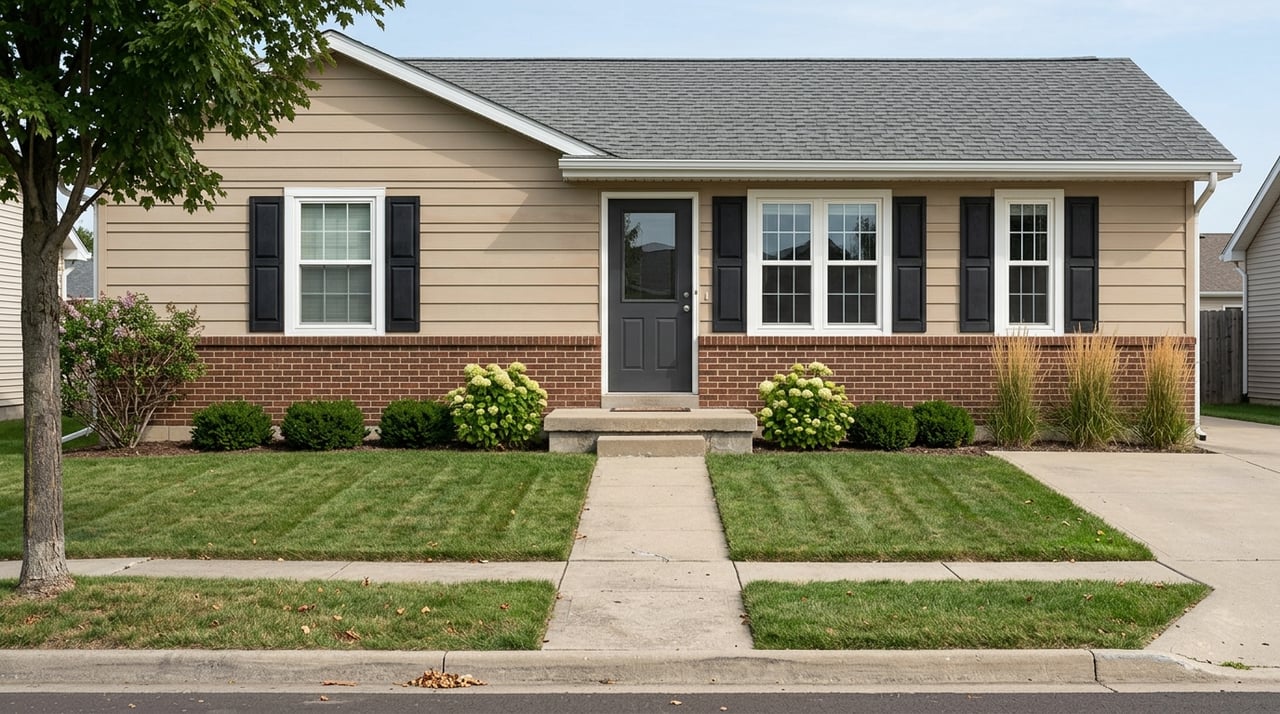
If you are thinking about buying a single-family home in Westmont, you are probably asking a practical question: what does the housing stock actually look like, and what should you expect for your budget? That matters in a village where older grid-street homes, later subdivision homes, and a limited amount of newer infill all exist side by side. The good news is that Westmont gives you a range of options, but it helps to know how age, lot size, layout, and competition shape the market.
Westmont Single-Family Homes at a Glance
Westmont is a mature, largely built-out village, which means most of the housing inventory is already established rather than part of large new development. According to CMAP data for 2019 through 2023, single-family detached homes make up 41.0% of Westmont housing units.
That mix is important because it helps explain why detached homes in Westmont can feel varied from block to block. You may see older homes in the central street grid, then find later subdivision-style streets to the north or south with a different look, lot pattern, and layout.
The village's own history notes that older housing is concentrated in the central grid, while curving subdivision streets point to later development. Westmont's 2026 zoning update also reflects the reality that the village is largely built out, with redevelopment and reuse now taking on a bigger role.
What Age of Home Should You Expect?
If you want a newer home, Westmont can have options, but most of the housing stock is not new construction. CMAP reports a median year built of 1976, which gives you a useful baseline when you start touring detached homes.
A large share of homes were built between 1970 and 1989, accounting for 42.6% of the housing stock. Another 28.4% was built between 1940 and 1969, while 21.8% dates from 1990 to 2009, 4.9% is from before 1940, and just 2.3% was built in 2010 or later.
In real terms, that means many single-family homes in Westmont may offer solid suburban layouts but still vary widely in updates. Some homes may have remodeled kitchens, newer mechanicals, or expanded living space, while others may reflect more of their original finishes.
Common Floor Plans and Home Sizes
Westmont tends to offer a lot of smaller-to-mid-size homes rather than a market dominated by very large single-family properties. CMAP data shows 34.5% of housing units have 2 bedrooms, 27.0% have 3 bedrooms, and 13.7% have 4 bedrooms.
Current active detached listings reinforce that pattern. Many are 3-bedroom homes in roughly the 1,008 to 1,880 square foot range, which gives buyers a realistic picture of what is commonly available.
For you as a buyer, that means Westmont can be appealing if you want a manageable single-family home with a yard, without necessarily stepping into the price point of much larger suburban housing in nearby communities. It also means layout matters a lot, since homes with similar bedroom counts can feel very different in daily use.
Lot Sizes and Zoning Basics
Lot size can play a major role in how a home feels, especially in an established suburb. In Westmont, zoning minimums for detached-house lots range from 15,000 square feet with 100 feet of width in R-1 districts down to 7,800 square feet with 50 feet of width in R-3, R-4, and R-5 districts.
That range helps explain why you may see both wider lots and more compact in-town parcels depending on the part of the village. It also gives context for what is typical when you compare homes on older streets versus subdivision-style blocks.
The zoning code also allows nonconforming lots to remain buildable for single detached houses. In addition, lots of record with at least 50 feet of width can be redeveloped without a variance if other rules are met, which can matter if you are considering teardown, renovation, or infill potential.
Where Homes May Feel More Updated
In a built-out market like Westmont, location within the village often affects the style and condition you will see. Based on the village's description of older central-grid housing and later subdivision development, along with the current listing mix, more updated or higher-priced single-family homes appear to show up more often in areas such as Oakwood, Heath Place, Indian Trail, Fernwood, Warwick, and North Lincoln.
By contrast, more dated or value-oriented homes are still visible on older grid-core streets such as Hudson, Washington, Lincoln, Cass, Burlington, and Park. This is not a rule for every property, but it is a useful pattern to keep in mind as you search.
For buyers, this can help set expectations before a showing. Two homes with the same bedroom count may offer very different finishes, lot layouts, expansion potential, and price depending on where they sit within Westmont.
What Prices Look Like Right Now
Westmont sits in a price range that can feel approachable compared with some nearby western suburbs, but it is not a bargain market in the sense of being deeply discounted. Realtor.com reports a median listing price of $400,000, while Redfin's May 2026 snapshot shows a median sale price of $409,755.
Census QuickFacts places the median value of owner-occupied homes at $379,100. That sits fairly close to current listing medians, which can be useful if you are building an early budget or trying to compare long-term value with current asking prices.
Recent sales also show how much condition and size matter. A 3-bedroom, 1.5-bath, 1,000-square-foot home on South Hudson sold for $390,000, while larger or more upgraded homes sold higher, including examples at $530,000, $632,500, and even $975,000.
How Competitive Is the Westmont Market?
If you are shopping for a single-family home in Westmont, you should be prepared for competition. Realtor.com reports 25 median days on market and 59 active listings, while Redfin says homes averaged 4 offers.
The same Redfin snapshot notes that 55.7% of homes sold above list price, with a sale-to-list ratio of 102.4%. Put simply, well-positioned homes can move quickly and may attract multiple buyers.
That does not mean every home becomes a bidding war. It does mean your search is easier when you know your budget, your must-haves, and where you can be flexible on updates, lot size, or exact location.
How Westmont Compares to Nearby Suburbs
For many buyers, Westmont stands out because it can offer access to the western suburbs at a lower price point than some neighboring markets. Realtor.com shows nearby median listing prices of $499,450 in Downers Grove, $599,000 in Wheaton, $676,633 in Naperville, and $805,000 in Elmhurst.
Lombard and Oak Park appear closer to Westmont, roughly in the $400,000 to $420,000 range. That puts Westmont in an interesting middle position.
If you are comparing suburbs, Westmont often reads as a lower-cost alternative to some pricier nearby communities, rather than a low-cost outlier. For buyers who want a detached home and need to balance budget with location, that can be a strong advantage.
Why Expansion Potential Matters
In a village with limited new supply, the potential to improve or expand a property can be a meaningful factor. Westmont's 2026 zoning update allows accessory dwelling units on residentially zoned lots with detached houses.
The same update replaced older detached-garage and shed caps with a combined 1,250-square-foot accessory-building allowance. That does not change lot coverage limits, but it does give some owners more flexibility when evaluating a property's future use.
If you are looking at an older single-family home with a solid lot and favorable setback pattern, it may be worth paying attention to what the site allows. In Westmont, a home's value is not just about its current condition. It can also be about what the lot lets you do over time.
What Buyers Should Focus On First
When you tour single-family homes in Westmont, it helps to evaluate each property through a few practical lenses:
- Age and updates: Does the home reflect its original era, or has it been meaningfully improved?
- Layout: Does the floor plan work for how you live now, not just the bedroom count?
- Lot utility: Is the yard size and shape useful for your goals?
- Location pattern: Are you in an older grid area or a later subdivision pocket?
- Future flexibility: Could the lot support future redevelopment or accessory structures under current rules?
- Pricing strategy: Is the home positioned for competition based on its condition and location?
This kind of framework can help you compare homes more clearly, especially in a market where similar list prices may hide big differences in value.
Bottom Line on Westmont Single-Family Homes
Westmont single-family homes offer a mix that many buyers find appealing: established housing stock, practical floor plans, a range of lot sizes, and pricing that often compares favorably with some nearby western suburbs. At the same time, because the village is largely built out, inventory can be competitive and the difference between a dated home and an updated one can be significant.
If you are planning a move in Westmont, the best approach is to look beyond the headline price and focus on age, condition, layout, lot potential, and micro-location within the village.
Frequently Asked Questions
What is the typical price for a single-family home in Westmont?
Current market snapshots show a median listing price around $400,000 and a median sale price of about $409,755.
Are most single-family homes in Westmont newer construction?
No. Westmont's housing stock is mostly established, with a median year built of 1976 and only 2.3% of housing built in 2010 or later.
What home sizes are common for single-family homes in Westmont?
Many detached homes on the market are 3-bedroom layouts, often around 1,000 to 1,880 square feet.
Are Westmont single-family homes competitive for buyers?
Yes. Recent market data shows homes averaging 4 offers, with more than half selling above list price.
Do Westmont single-family homes offer redevelopment potential?
Some do. Westmont's zoning code allows certain nonconforming lots to remain buildable, and current rules also allow accessory dwelling units on residential lots with detached houses.
Additional Resources
If you want help sorting through those tradeoffs and building a smart strategy in Westmont, call or text Rob Brannigan at 847.609.0570 or visit robbrannigan.com.
Written by Rob Brannigan (IL License #475.164040), RENE + SRS. Lifelong Downers Grove resident. Data-driven guidance for sellers and buyers in Downers Grove and surrounding communities.