What architectural styles are most common in Downers Grove, IL? Downers Grove homes span styles from Greek Revival and Queen Anne to Craftsman bungalows, mid-century ranches, split levels, and modern farmhouse construction, reflecting more than 150 years of residential building across the village.
If you have ever driven through Downers Grove and wondered why one block can feature a Victorian-era home, a classic bungalow, and a mid-century ranch, you are not imagining it. The village has a layered housing story shaped by early settlement, rail growth, and later suburban expansion. If you are buying, selling, or simply trying to understand what gives this market its character, knowing the common architectural styles can help you read the neighborhood more clearly.
Why Downers Grove Has So Many Styles
Downers Grove was settled in 1832 and incorporated in 1873. Its growth was closely tied to the railroad, including an early station completed in 1864 that helped support farm distribution and downtown development. That pattern helps explain why you see older homes near established in-town areas and a wider spread of postwar and newer homes across the village.
According to CMAP's 2025 housing profile, 8.9% of housing units were built in 1939 or earlier, 16.5% from 1940 to 1959, 38.5% from 1960 to 1979, 21.2% from 1980 to 1999, and 14.9% in 2000 or later. The median year built is 1974, and 69.4% of units are single-family detached, which is a big reason the village feels visually diverse.
The Village of Downers Grove's architectural booklet identifies 17 architectural styles and 5 vernacular forms, from Greek Revival and Queen Anne to Ranch, Split Level, and Neo Revival. Downers Grove is not defined by one signature look. It is better understood as a series of building eras layered together over time.
Early Homes and Victorian Styles
The oldest homes in Downers Grove stand out for their craftsmanship, symmetry, ornament, and shapes less common in newer construction.
Greek Revival homes are usually rectangular, symmetrical, and often gable-fronted. Local examples include the Pierce Downer House and The Parsonage. Gothic Revival homes tend to look more vertical and dramatic, with steep cross-gables, decorative vergeboard, and pointed windows. The Drew House and the Mary and Lester Naramore House are local examples.
Italianate homes are less common but easy to spot, with low-pitched roofs, bracketed eaves, tall windows, and ornate porches. Queen Anne homes bring some of the most recognizable Victorian detail: asymmetrical massing, steep cross-gables, textured shingles, and decorative porches. The Herring House and the Bunge House are strong local examples.
Classic In-Town Homes From the Early 1900s
For many buyers, the most familiar Downers Grove charm shows up in early 20th-century homes near established in-town areas. This is where you find cottages, bungalows, Foursquares, and revival-style homes that feel classic without the heavy ornament of the Victorian era.
Foursquare homes are an important form in Downers Grove. Many local Foursquares include Prairie, Craftsman, or Colonial Revival details, which is why a block can feel cohesive without every house being identical. Craftsman and bungalow homes often feature wide eaves, low rooflines, strong porch presence, and visible detailing in brick or woodwork.
Sears kit homes also matter here more than many buyers realize. The Joseph Moore House is a Sears kit home bungalow and the George Graves House is a Sears Del Rey model. Twenty-four Sears homes still remain in Downers Grove, making them a meaningful part of the local housing landscape.
1920s to 1940s Revival Styles
As architectural tastes evolved, Downers Grove added homes inspired by earlier European and American design traditions.
Tudor Revival homes are among the easiest to identify: steep roofs, dominant front gables, half-timbering, masonry walls, and narrow casement windows. Spanish Revival is less common but memorable, with stucco or brick exteriors, clay tile roofs, arched openings, and terraces instead of full porches. The Naramore House is a standout local example.
Postwar Ranch and Mid-Century Homes
A large share of Downers Grove homes were built after World War II. Ranch homes became a common vernacular form from the 1930s through the 1970s, and most local ranch homes show Mid-Century Modern design characteristics: low profiles, horizontal lines, and practical single-level living.
Split levels are another common form, offering a practical blend of ranch and two-story living with staggered floor levels. The Mochel House, built in 1964, is a strong local example of Mid-Century Modern design, with a low roofline, clerestory windows, deep overhangs, and mixed exterior materials.
New Construction and Neo-Revival Looks
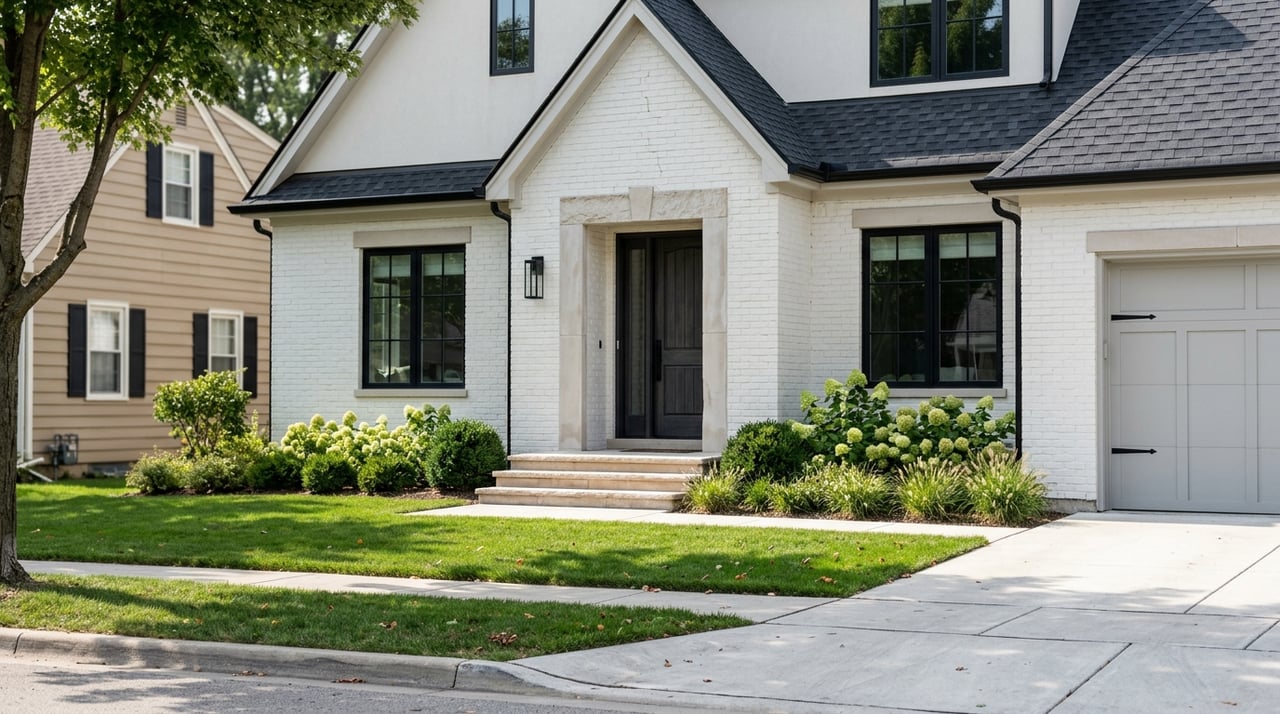
Newer homes in Downers Grove often borrow from older styles while adapting them for modern living. In the current market, that shows up most often as modern farmhouse or transitional custom construction, with open layouts, larger kitchens, attached garages, and updated finishes. These homes compete on layout, systems, and finish level rather than old-house charm.
What Style Means When You Buy or Sell
Architecture is not just about looks. In Downers Grove, style can also shape maintenance expectations, pricing conversations, and how a home is presented to buyers.
Older homes often offer the strongest visual character but can come with more maintenance complexity. Mid-century homes may have older systems, and additions made over time can affect flow or energy performance. Newer homes may reduce near-term repair needs but often carry a premium for updated systems and move-in-ready finishes.
If you are considering an older home, understand the difference between being historically recognized and being formally regulated. The Village's historic-preservation process involves the Historic Preservation and Design Review Board and a certificate-of-appropriateness process. The Downers Grove Historical Society's Historic Home Program is honorary and does not restrict exterior alterations. That distinction matters if you are evaluating future renovation plans.
Frequently Asked Questions
What architectural styles are most common in Downers Grove? Downers Grove includes a wide mix of styles, but buyers are especially likely to see bungalows, Foursquares, Colonial Revival homes, Tudor Revival homes, ranches, split levels, Mid-Century Modern homes, and newer neo-revival or modern farmhouse construction.
Are there many historic homes in Downers Grove? Yes. Downers Grove has homes dating back to the 1800s, and the Village's architectural materials document a broad range of historic styles including Greek Revival, Gothic Revival, Italianate, Queen Anne, and early 20th-century revival styles. Twenty-four Sears kit homes also remain in the village.
Does historic recognition in Downers Grove restrict exterior changes? Not always. The Village's formal preservation process is separate from the Downers Grove Historical Society's honorary Historic Home Program, which does not restrict exterior alterations. Buyers considering renovation should clarify which designation applies to a specific property.
Additional Resources
Selling & Buying in Downers Grove
If you are planning a move in Downers Grove, call or text Rob Brannigan at 847.609.0570 or visit robbrannigan.com. Rob is a REALTOR® with @properties | Christie's International Real Estate and a lifelong Downers Grove resident who knows this market from the inside.
Written by Rob Brannigan (IL License #475.164040), RENE + SRS. Lifelong Downers Grove resident. Data-driven guidance for buyers and sellers in Downers Grove and surrounding communities.